- Queer Word
- Posts
- 🫐 ever heard of 'berrisexuality'? 🫐
🫐 ever heard of 'berrisexuality'? 🫐
the micro-label that's usefully helping people articulate an attraction pattern that doesn't fit neatly into lesbian, bi, or pan

K Anderson
December 26, 2025
QUEER WORD
BERRISEXUALITY
What It Means:
Berrisexuality is a micro-label used to describe somebody whose primary attraction is to feminine-aligned and androgynous genders, with only occasional or minor interest in masculine-aligned genders or men. Think of it as pansexual or omnisexual, but with a strong preference for femininity (and, therefore, a much lighter pull toward masculinity).
Let’s Use It In A Sentence:
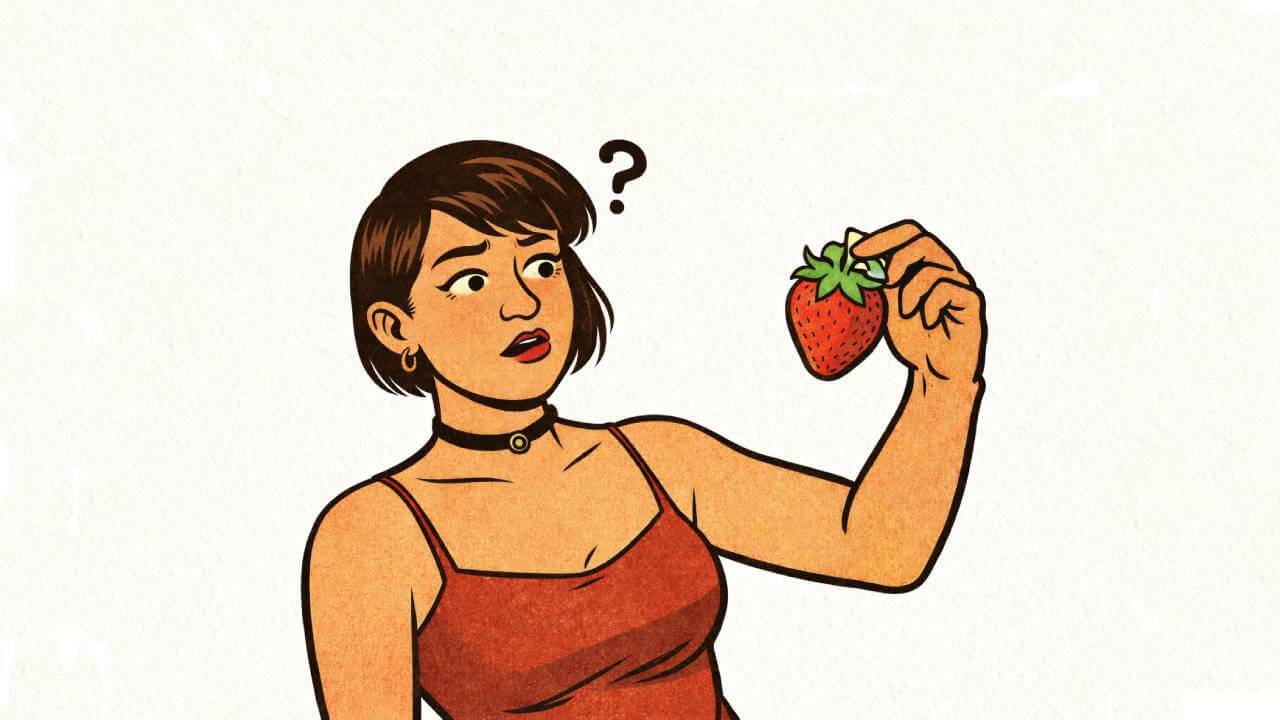
Kara patiently explained to her mother, for the seventeenth time, that her berrisexuality had nothing to do with wanting to settle down with a strawberry.
A little bit of history:
It can be tempting to scrunch your nose up when hearing of a new micro-label to describe sexuality or gender, and I've been guilty of this numerous times.
‘What? Another one?’
‘It’s literally made up by someone on the internet!’
'Do we really need to go to this level of specificity?'
But then I think of the relief and clarity that comes for those who find language that helps explain who they are and what it is that they feel. The joy that spreads through someone who can finally articulate their being. And suddenly, the sneering and scoffing seems a little less justified (and a bit dick-ish, if I’m honest).
Which is my long, roundabout way of introducing this term….
Berrisexuality was first coined and shared by Tumblr user @genderstarbucks in November 2023. And, like most micro-labels, it came about because someone was trying to describe their own experience and realised there wasn't really a word for it yet.
At its core, the term describes people who feel attraction across all genders, but with a strong preference for feminine and androgynous presentations. The attraction to masculine-aligned people or men exists, sure, but it's more rare. It’s the kind of thing where you might go years without feeling it, and then suddenly meet someone who happens to be the exception.
How Is This Different From Other Labels?
Good question. There are a few similar micro-labels floating around, like:
Finssexual / Finsexual – Attraction exclusively to feminine people (women and feminine-aligned non-binary people). This one's stricter than berrisexual because it doesn't include that occasional pull toward masculinity.
Neptunic – Attraction to women, feminine non-binary people, and androgynous people, but not men. Again, a bit more rigid than berrisexual.
Pansexual / Omnisexual – Attraction to all genders, but without the acknowledged preference that berrisexuality describes.
The key difference with berrisexuality is that it acknowledges that there is an imbalance in attraction. You're not equally attracted to all genders (which is what some people assume pansexuality means, even though it doesn't have to). You have a clear idea of your preference, but you're still open to the occasional exception.

the berrisexual flag
A few other things worth knowing:
There’s a flag! The colours are soft pinks, whites, and berry-toned purples. And, if you’ve been wondering where the ‘berri’ comes in to all of this you’ll be pleased to learn that the colours of the flag are meant to evoke the imagery of berries ripening on a vine - soft, feminine, with just a hint of something unexpected.
Berrisexuality is also sometimes referred to as Laurian.
The romantic orientation equivalent is called (rather unsurprisingly) berriromantic.
The inverse of berrisexual is almondsexual. Almondsexual describes someone whose primary attraction is to masculine and androgynous people, with only occasional interest in feminine people.
And finally, a reminder…
These labels aren't invented to confuse people or to be exclusionary. They exist because someone, somewhere, couldn't find the words to describe what they were feeling.
Berrisexuality might not be for you, and that's fine.
But for someone else, it might be the exact word they've been searching for.
(oof, sorry if that got a bit preachy! I hope you know what I mean!).
POLL: Have you heard of 'berrisexual' before? |
FAQs
More About Berrisexuality…
Q: What does berrisexual mean?
A: A berrisexual person is primarily attracted to feminine-aligned and androgynous genders, while only occasionally or rarely experiencing attraction to masculine-aligned genders or men. Rather than excluding masculinity altogether, the label describes a clear preference towards femininity.
Q: Is berrisexuality a sexual orientation?
A: Yes. Berrisexuality is a sexuality microlabel. That is, a more specific term that some people use to describe the particular pattern of their attraction. Like many microlabels, it's a self-identification rather than a medically or legally defined orientation.
Q: Is berrisexuality the same as pansexuality?
A: Not quite.
Pansexuality generally describes attraction regardless of gender. A berrisexual person may also experience attraction across multiple genders, but with a much stronger preference for feminine-aligned and androgynous people than masculine-aligned people.
Q: What's the difference between berrisexuality and omnisexuality?
A: Omnisexual people are attracted to all genders while recognising gender as part of that attraction.
Berrisexuality describes a more specific pattern of attraction, where femininity is strongly preferred even though attraction to masculinity can still occur.
Q: What's the difference between berrisexuality and almondsexuality?
A: Berrisexuality and almondsexuality are often described as complementary microlabels.
A berrisexual person is primarily attracted to feminine-aligned and androgynous genders, with only occasional attraction to masculinity.
An almondsexual person experiences the opposite pattern, being primarily attracted to masculine-aligned genders while only occasionally experiencing attraction to feminine-aligned or androgynous people.
Q: Can a berrisexual person date men?
A: Yes, of course.
Berrisexuality doesn't mean someone can never be attracted to men. Rather, it describes attraction that is predominantly directed towards feminine-aligned and androgynous people, while attraction to masculinity is less common.
Q: Can someone be both berrisexual and pansexual?
A: Some people choose to describe themselves using both labels.
For example, someone might identify broadly as pansexual while using berrisexual to explain that, in practice, their attraction tends to lean much more strongly towards femininity.
As with many identity labels, the words people choose are personal.
Q: Is berrisexuality a recognised identity?
A: It's recognised within some online LGBTQ+ communities and among people who use microlabels to describe their experiences.
However, it isn't a universally recognised sexuality, and many LGBTQ+ people will never have encountered the term.
Like many newer identity labels, its use varies between communities.
Q: Where did the term "berrisexuality" come from?
A: Berrisexuality emerged online as part of a broader wave of sexuality microlabels that developed through LGBTQ+ internet communities.
The term spread through community use, particularly on social media and identity wikis.
Q: Why do people use microlabels like berrisexuality?
A: For some people, broad labels such as bisexual or pansexual don't fully capture the nuances of their attraction.
Microlabels offer a more specific vocabulary, allowing people to describe patterns of attraction that feel more accurate to their lived experience.
Not everyone finds microlabels useful, but many people value having language that reflects their identity more precisely.
Q: Is berrisexuality controversial?
A: Like many newer identity labels, berrisexuality has prompted debate.
Some LGBTQ+ people welcome microlabels as a way of describing diverse experiences of attraction. Others feel that creating increasingly specific labels can become confusing or unnecessary.
Ultimately, whether someone chooses to use the term is a personal decision.
Q: Does berrisexuality have a flag?
A: Of course! Several versions of a berrisexual pride flag have circulated online, although there isn't a single universally accepted design.
As with many microlabels, different communities and creators have produced slightly different flags over time.
Q: Why is it called "berrisexuality"?
A: Despite the name, it has nothing to do with berries. Instead, berrisexual was deliberately created as a companion term to almondsexual. The two labels form a matching pair: while berrisexuality describes a preference for femininity, almondsexuality describes the opposite pattern—a preference for masculinity.
Like many internet-era identity labels, the name wasn't chosen because of a historical connection or symbolic meaning. Instead, it emerged from online LGBTQ+ communities, where new words are often coined collaboratively to describe experiences that existing labels don't quite capture.