- Queer Word
- Posts
- ✍️ what are 'viatical settlements'? ✍️
✍️ what are 'viatical settlements'? ✍️
a morally messy piece of queer history from the AIDS crisis

K Anderson
January 30, 2026
QUEER WORD
VIATICAL SETTLEMENTS

What It Means:
A viatical settlement allows a person with a terminal or chronic illness to sell their life insurance policy to a third party for an immediate cash lump sum, typically 50-80% of the face value.
The term comes from the Latin ‘viaticum’, which translates to ‘provisions for a journey’ or ‘money for a journey’.
The buyer takes over the insurance premiums and, when the seller dies, collects the full payout. The seller gets money now, while they’re still alive to use it.
Let’s Use It In A Sentence:
Colin signed a viatical settlement because rent was due, his body was failing, and he wanted, one last time, to go to Disney Land.
How it Worked
At the height of the AIDS crisis, an odd financial practice emerged in the USA that allowed seriously ill people to access cash by selling their life insurance policies to strangers.
Here's (basically) how it worked:
Let’s say you find out that you have HIV, and your doctor tells you that you’ve got months, or maybe a few years, to live.
You're too unwell to work, but rent is still due, bills still need paying, and food still needs buying..
So you sell your life insurance policy to a third party for a lump sum. That lump sum is significantly less than its eventual value.
The third party takes over the premium payments while you're alive.
When you die, they collect the full life insurance payout.
Yes. It's every bit as morbid as it sounds.
And yet, thousands of people signed up for this.

a vintage magazine ad for viatical settlements
The Ethical Grey Area
It's easy to clutch your pearls when you first find out about this scheme. All that money ruthless investors made off other people's pain and misery. Rubbing their hands together, waiting for the inevitable phone call.
That's exactly how I responded. ‘How ethically murky!’. ‘How grotesque that people would actually do this kind of thing!’
But, then I went digging, discovering more about people’s lived experiences, and I realised it wasn’t quite as clear cut as I had first thought.
For many people, viatical settlements were a lifeline. At the time, there were no effective treatments for HIV, and most didn’t expect to survive. They had no other way to access cash, and this was a way to live out their remaining time with some measure of comfort and dignity.
For others, especially those estranged from their blood families or disowned for being gay, there was no one to leave the insurance payout to anyway. No spouse (or no legally recognised one), no children, and no one waiting on the other side of the policy. Why not take what they could and actually enjoy it?
The Bit That No One Saw Coming…
Ok, now this is the bit where I admit I’m not above a little schadenfreude. Because when I found out what happened next, I couldn’t help but smile.
By the mid-90s, antiretroviral treatments arrived. People who once thought they had only years to live suddenly had their entire lives ahead of them again.
But the people who'd bought their insurance policies through viatical settlements? Well, they had to either keep paying the premiums indefinitely, or quietly accept the loss and walk away.
They’d invested in death. But then death didn't show up.
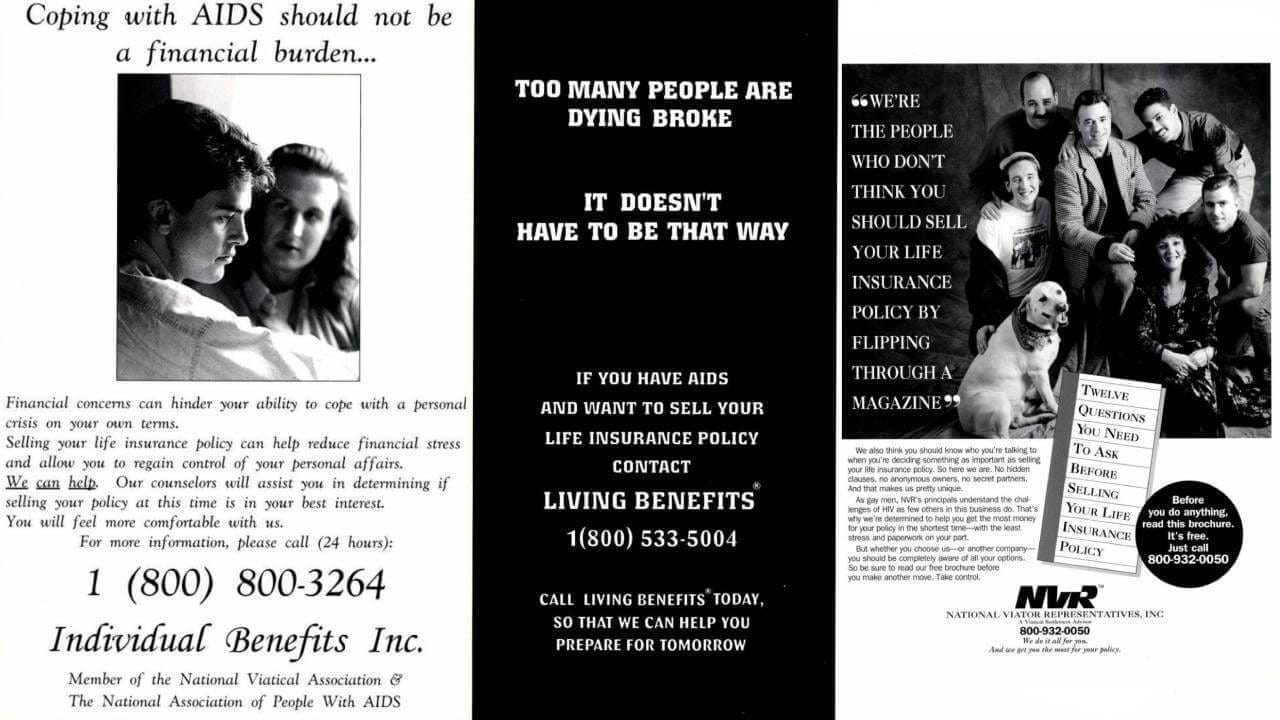
more vintage magazine ads for viatical settlements
So Where Does That Leave Us?
I'm still not entirely sure where I land on this.
Part of me thinks… well…. good.
Let dying people access their own money. Let them have some dignity and comfort in whatever time they have left. Sure, other people might be profiting from their deaths, but at least the people at the centre of it aren’t facing their final months destitute and terrified.
But, I don’t know… it's also such a bleak, uniquely American nightmare.
The kind of solution that only makes sense in a country where getting sick can bankrupt you and there's no safety net to catch you when you fall. A system so broken that selling your death to a stranger for cash becomes a rational choice (apologies to any American readers out there!).
So, I’m not sure whether I think viatical settlements were ethical or exploitative.
Maybe they were both?
And maybe that's the point. The cruelty wasn't the settlements themselves.
It was everything that made them necessary.
POLL: Viatical settlements: predatory, practical, or something in between? |