- Queer Word
- Posts
- 💒 what the heck is a 'boston marriage'? 💒
💒 what the heck is a 'boston marriage'? 💒
the Victorian-era euphemism for lesbian relationships

K Anderson
March 20, 2026
QUEER WORD
BOSTON MARRIAGE
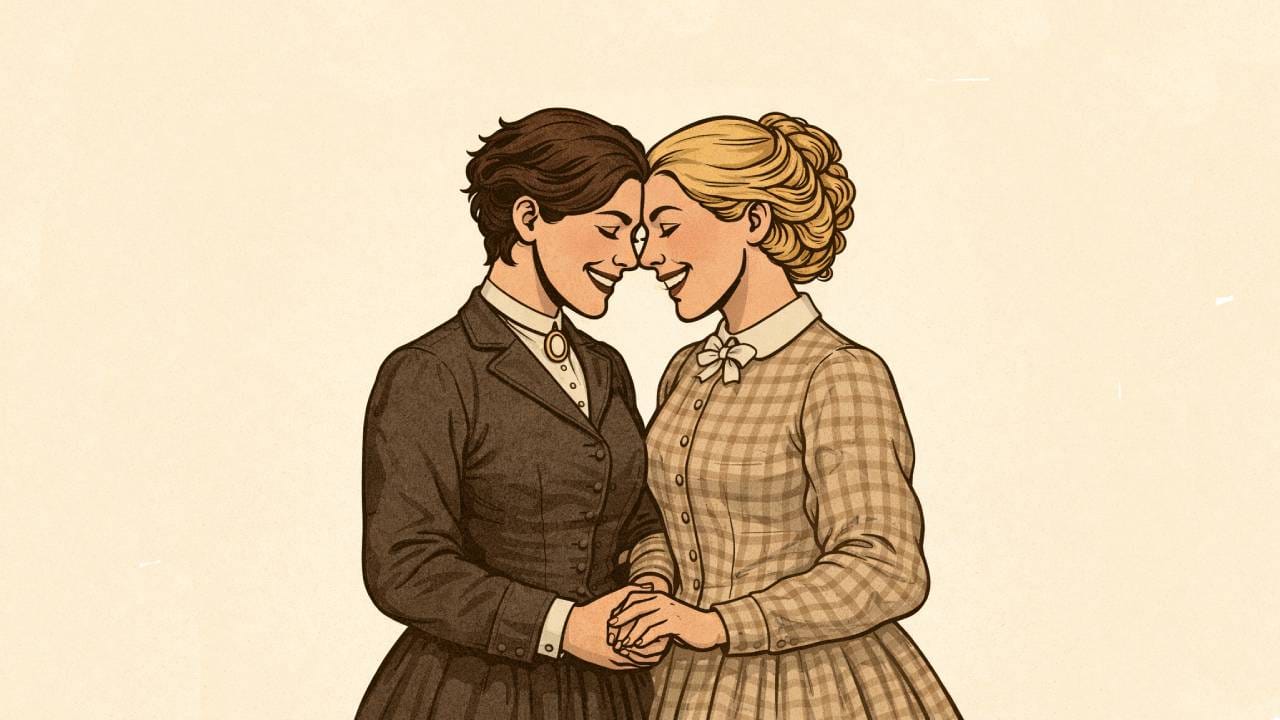
What It Means:
A US term from the late 19th and early 20th century describing a long-term domestic partnership between two financially independent women.
Let’s Use It In A Sentence:
Catherine's parents were delighted she'd found a respectable Boston Marriage with her friend Becky. They were somewhat perplexed, though, that there was only one bed in the house they shared together.
So Why Exactly Is It Called a ‘Boston Marriage’?
We all know that lesbians have been around since the beginning of time.
And, if that's the case, it’s safe to assume that lesbian pairings have been around for roughly the same amount of time (give or take).
So why, then, is a long-term partnership between two women named after an American city that wasn’t even given that name until 1630?
Good question. Let’s find out together.
But first, let’s make sure we’re all clear on what exactly a Boston Marriage is.
What is a ‘Boston Marriage’?
A Boston Marriage is a Victorian era term that refers to a long-term partnership between two women who lived together, independent of financial support from a man.
And whilst it’s kind of cool to look back at this and think, ‘aww, how wonderfully progressive,’ there are a few important bits of context worth keeping in mind.
Victorian Blind Spots (and Somewhat Iffy Beliefs)
Victorian society largely insisted that women lacked sexual desire altogether. Which meant that when people saw two women living together, they didn’t even consider that they could be a lesbian couple.
There was no concept of a lesbian identity at the time, and so these women were mostly just viewed as eccentric spinsters. Unusual, sure. But not queer.
It’s also worth noting that norms around female friendship were very different at the time. Women were actively encouraged to kiss, hold hands, and be physically affectionate with one another. Rather than being viewed as romantic or sexual it was seen as wholesome, even preparatory, for eventual marriage (!).
Which, despite being weird as hell, conveniently gave actual lesbian couples a fair bit of cover.
Class Matters
Most of the women in Boston Marriages were from the upper classes.
And whilst wealth didn’t protect them from all stigma or suspicion, it did provide a fairly substantial buffer. Financial independence meant they could live on their own terms, without needing to justify themselves to parents, relatives, or society at large.
Working-class women didn’t have that luxury. Two women living together without male support would have faced far more scrutiny, gossip, and outright hostility (not to mention the simple fact that it would have been financial impossible in many cases).
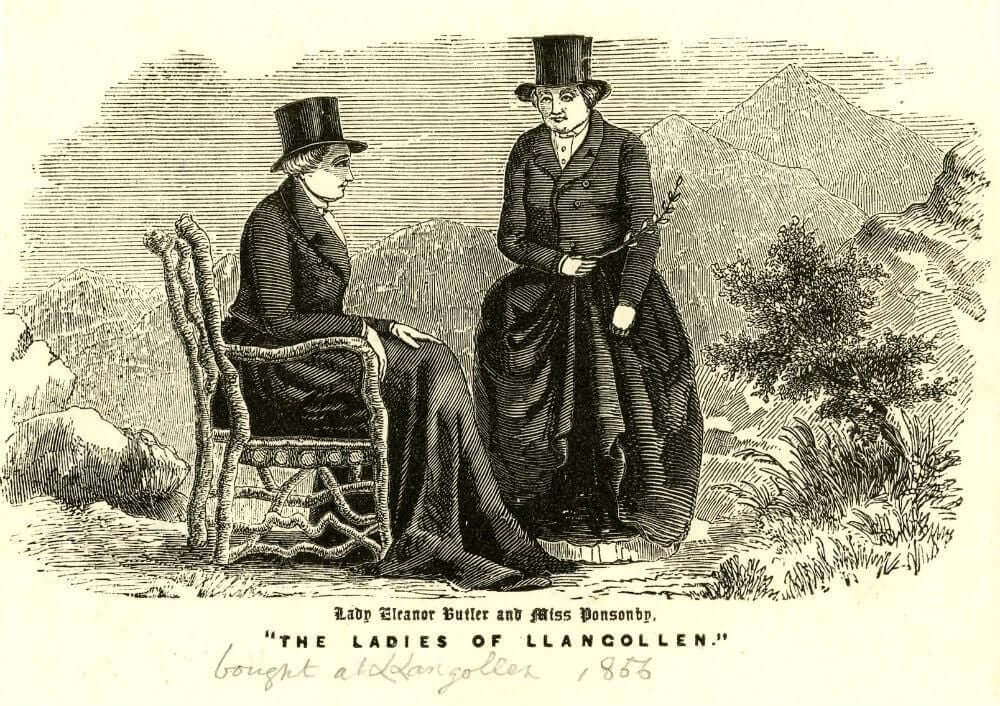
The Ladies of Llangollen are a famous example of a boston marriage (and, also, two women who weren’t afraid to lean into their eccentricities!)
So Why ‘Boston’?
Oh, right. Sorry, I forgot to answer that question
The most common theory is that it's connected to Henry James's novel The Bostonians (1886), which featured a long-term cohabiting relationship between two unmarried women.
But the name also makes more sense when you look at what Boston represented at the time.
In the late 19th century, it had a reputation as a hub for educated, progressive women. It was home to women’s colleges, reform movements, and a pretty intellectual, quietly progressive social scene.
There was just one problem.
For many of these women, that independence came with conditions. Marriage often meant the end of a career, especially in academic settings, where women were expected to resign their posts once they became wives.
So they were faced with a choice: marriage, or carving out a different path.
And, so, they built lives with each other. Sharing homes, pooling incomes, and creating stable, long-term partnerships that allowed them to keep their work (and their autonomy).
From the outside, it looked perfectly respectable and justifiable.
And so Boston Marriage became shorthand for exactly that kind of arrangement.
Purely Platonic?
Ok, but the thing that we haven’t discussed yet is that historical records insist that not all Boston Marriages were romantic or sexual in nature, and that many were purely for pragmatic reasons.
Which is an interesting thing to ponder.
Because on the one hand, we have to take those records at face value. Not every close relationship between women was romantic, and not every shared household had a simmering love story behind closed doors.
But on the other hand… we’re dealing with a period in history where women’s sexuality was either denied, misunderstood, or deliberately ignored. So it’s hard not to wonder how much was simply left unsaid, and how many stories of queer joy we’re missing out on.
Most likely, we’ll never know for sure.
But I certainly have my suspicions.
But what do you think? Answer the poll below and let me know!
POLL: Do you think most 'Boston Marriages' were romantic relationships? |